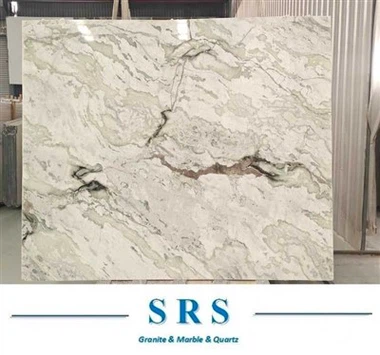

Polished vs Honed Marble for Commercial Projects
Sep 04, 2026
Polished marble has a reflective surface that increases color depth and vein contrast, while honed marble has a smooth matte appearance with softer reflections. For commercial projects, the right finish depends on the location, lighting, foot traffic, cleaning plan, stain and etch visibility, required slip performance and the approved visual standard-not appearance alone.
Polished vs Honed Marble at a Glance
Both finishes begin with the same stone. The difference comes from how far the surface is processed with progressively finer abrasives. Polishing continues to a reflective finish; honing stops at a lower level of refinement to produce a matte or low-sheen surface. Because mineral structure varies, two marble varieties may respond differently even when processed to the same nominal finish.
- Strengthens dark colors, contrast and decorative veining.
- Reflects lighting and surrounding architecture.
- Can make dull areas, etching and some scratches more noticeable.
- Often selected for feature walls, reception elements and controlled interiors.
- Reduces glare and softens the contrast of veins and color.
- Supports quiet, contemporary or understated design schemes.
- May make light surface wear less visually dominant.
- Often considered for floors, walls, stairs and frequently touched surfaces.
See How Finish Changes the Visual Character
Finish selection should use physical samples of the specified stone. Photographs can show the overall effect, but image exposure, screen settings and lighting may change perceived sheen and color.

A polished finish intensifies the dark field and contrasting veins of Belvedere marble.

A honed surface creates a softer light response without a mirror-like reflection.

Light honed marble supports a calm appearance across repeated interior modules.
Buyers can compare a current honed marble slab with Belvedere polished marble slabs, then request samples from the production lot intended for the project.
Commercial Marble Finish Comparison
| Decision Factor | Polished Marble | Honed Marble | Project Check |
|---|---|---|---|
| Appearance | Reflective surface with stronger apparent color depth and vein contrast. | Matte or low-sheen surface with a softer, more uniform visual effect. | Review the actual stone under the project's intended lighting. |
| Glare and reflections | Can reflect luminaires, windows, signage and movement. | Diffuses more light and usually produces fewer sharp reflections. | Assess glare at entrances, long corridors, display areas and work zones. |
| Etch visibility | Acid-related dulling can contrast strongly against surrounding gloss. | A dull mark may be less contrasted, but the stone can still etch. | Consider food, beverage, cleaning chemical and toiletry exposure. |
| Scratch and wear visibility | Fine scratches and traffic paths may interrupt reflections. | Minor abrasion may blend more readily into the matte field. | Use a representative wear sample for demanding areas. |
| Soiling appearance | Fingerprints, water spots and residues can be visible in reflected light. | Oils and uneven cleaning can produce darker or patchy-looking areas. | Trial the proposed cleaning products and procedure on a sample. |
| Floor use | Requires project-specific review, especially where water or contaminants may occur. | Often considered where reduced sheen and additional surface texture are preferred. | Do not infer slip performance from the finish name; verify the required test and condition. |
| Maintenance response | May require periodic specialist work to restore consistent gloss. | May require re-honing to correct uneven wear or local sheen changes. | Confirm access, maintenance budget and acceptable future appearance. |
Choose the Finish by Application
A commercial project can use more than one finish. A polished feature wall and honed circulation floor may use the same marble family while responding to different functional and visual needs. Junctions between finishes should be shown on drawings and approved with samples.
For modular flooring, compare the available marble tile range, including polished marble floor tile and white honed marble tile. For large panels or fabricated components, begin with the marble slab collection.
Do Not Use Finish Name as a Slip Rating
"Polished" and "honed" describe broad visual and processing categories, not a complete declaration of floor safety. Surface texture can vary between factories, stones, abrasive sequences and production runs. Slip performance can also change with water, dust, oil, cleaning residue, footwear, wear and slope.
The project team should identify the applicable local requirement, test method, test condition and minimum result. A dry result should not be substituted for a wet or contaminated condition when the intended location can reasonably experience moisture.
For transitions, stairs, ramps, entrances and other sensitive areas, coordinate the stone finish with drainage, mats, cleaning frequency, lighting, joint design and edge details. Physical approval samples should match the surface submitted for testing.
Plan Cleaning and Maintenance Before Approval
Commercial finish selection should include a realistic maintenance plan. The surface will be judged after months of operation, not only on installation day. Trial the proposed routine on a representative sample and keep the stone supplier, installer and facility team aligned.
Polished surface maintenance
A polished field depends on consistent reflection. Abrasive soil, unsuitable pads, acidic contact and uneven restoration can create visible dull areas. Entrance control and prompt spill response may be as important as the scheduled cleaning cycle.
Honed surface maintenance
A matte surface can conceal some fine abrasion, but oils, residues and inconsistent sealer application may create tonal differences. Cleaning trials should check whether the surface dries evenly and retains the approved low-sheen appearance.
Approve a Measurable Finish Standard
Descriptions such as "high polish," "satin" or "matte" can be interpreted differently. The order should connect the finish name to physical evidence and an inspection method that both buyer and supplier can apply.
Finish inspection should occur before packing while surfaces can be viewed under consistent light. Record affected slab or piece numbers when scratches, polishing waves, patchy honing, residues or local sheen differences require review. The natural stone slab inspection checklist can be used to connect finish approval with dimensions, repairs, traceability and packing.
Frequently Asked Questions
No. Honing often creates a lower-sheen surface with more texture, but the finish name does not prove slip performance. Test the specified stone and finish under the condition required for the project.
Honed marble can still react to acidic substances. The resulting dull area may contrast less with a matte finish than with a polished field, but the chemical sensitivity of the marble remains.
Specialist refinishing may change the surface, but feasibility and uniformity depend on the stone, installation, access, edges and existing condition. Approving the intended finish before fabrication is more controllable.
Minor abrasion may be less visible on some honed surfaces because it does not interrupt a strong reflection. Results vary with marble color, vein pattern, lighting, scratch depth and maintenance.
Yes. Different finishes can address separate design and use conditions. Mark every finish zone on the drawings and approve the junction, color response and maintenance plan with physical samples.
Compare Marble Finishes for Your Project
Send the marble name, application, finish preference, dimensions, thickness, quantity, destination, traffic conditions, cleaning requirements and drawings. We can review suitable slab options, finish samples and quotation details.