What is Nano-Crystallized Glass
Oct 29, 2021
What is Nano-Crystallized Glass
Nano-crystallized glass, also known as nano-crystal stone or nonporous marmoglass. Most nano-crystallized glass is manufactured in China and imported into the United States, but a few American companies feature branded versions. This material is said to be easily cut and tooled with the same techniques and equipment that is used for stone, but some firsthand accounts state it presents a few unique difficulties.

Features of Nano-Crystallized Glass
Nano-cystallized glass is suitable for use as a countertop material, but it can also be used for walls, floors, windowsills, sinks and tabletops.
Much like ordinary glass, it is made of natural materials, and it is chemically inert. Additional features of nano-crystallized glass are as follows:
Scratch and stain resistant
Heat resistant
Hard and durable
Nonporous
Recyclable
Nano-crystallized glass is much harder than ordinary glass or even standard crystallized glass. On the Mohs scale, it scores from 6.0 to 7.0, and it has a compression strength rating of 400 MPa, a flexural strength rating of 82 MPa and a rupture strength rating of 35 MPa.
Additionally, nano-crystallized glass has a water absorption rate of 0.004 percent to 0.02 percent, and it is totally radiation free. As expected, the material also has a DIN 4102 flammability rating of A1.
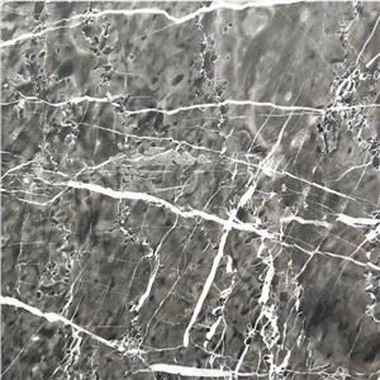
Consumers have stated that nano-crystallized glass is a preferred surfacing material because of its nearly pure white color, which is a natural byproduct of its manufacturing process. It is also quickly becoming known as an excellent substitute for white marble.

Fabrication of Nano-Crystallized Glass
Nano-crystallized glass is manufactured from a blend of natural materials that is 75 percent silica and 25 percent other natural minerals. The mixture is poured into a mold to form either a slab or a tile, and it is heated to a temperature ranging from 1,550 degrees Celsius to 1,800 degrees C. for 24 to 26 hours. The high temperatures and the length of time align the molecules of the glass on a nanoscopic scale, which it retains upon cooling and hardening.
Slabs of nano-crystallized glass are commonly available in sizes of 12 ft. by 12 ft., 16 by 16 ft. and 18 by 18 ft. with thicknesses of 3/8 in. or 1/2 in. Tiles are usually made to 24 in. by 24. in. by 3/4 in. Most slabs and tiles are polished by default, but they can be given a CNC satin finish. In addition, the material can be convexly or concavely manufactured for basins and other custom designs.
The cutting of nano-crystallized glass is usually accomplished with continuous blade saws, but it can also be honed, chiseled or sandblasted. The edges can be ground to a bullnose or chamfered. Remnants are 100 percent recyclable.
Installation of nano-crystallized glass is a simple process. The material does not need to be sealed, but a sealer may be added for additional protection. The slab or tiles are most commonly glued to a substrate with a clear resin product, such as Tenax Glaxs BM75, which is engineered specifically for glass and does not discolor from exposure to UV light.


Any more informations, would like to know about, just contact with us.
Email: srs@xiamensrs.com
Whatsapp/Mobile: + 86 18950057601