
Granite Stair Treads and Risers for Outdoor Steps
Nov 25, 2026
Granite stair treads and risers are used for entrances, outdoor steps, landscape stairways and interior staircases. They can be supplied in standard dimensions or fabricated to match construction drawings, with different surface finishes and front-edge profiles.
For a complete stair project, tread depth, riser height, nosing geometry, slip resistance, structural support and stone installation details must be coordinated before production.
Granite Stair Treads, Risers and Nosing
A granite staircase may use separate treads and risers or larger solid stone steps. Each arrangement has different fabrication, installation and weight requirements.
Granite Stair Treads
Treads are the horizontal walking surfaces of the staircase. Their finished depth, thickness, front edge and surface texture are important for both appearance and use.
Granite Stair Risers
Risers form the vertical face between adjacent treads. Stone risers can be selected to match the tread color or create a contrasting design.
Stair Nosing
Nosing is the front-edge detail of the tread. It may be straight, beveled or rounded, depending on the stair design and applicable accessibility requirements.

Common Granite Stair Tread and Riser Sizes
SRS granite stair products include cut-to-size treads, risers and larger solid steps. Dimensions vary with the stone design, fabrication method and project drawing.
| Component | Listed Size | Application |
|---|---|---|
| Granite Tread | 1000–1500 × 300–350 × 20mm | Cut-to-size stair tread for suitably supported designs. |
| Granite Tread | 1000–1500 × 300–350 × 30mm | Thicker stair tread option for selected applications. |
| Granite Riser | 1000–1500 × 130–160 × 20mm | Vertical stone facing between treads. |
| Grooved Granite Step | 1100 × 300 × 20mm | Fabricated tread with three grooves and a beveled front edge. |
| Solid Granite Step | Selected lengths of 500–2500mm, depth around 350mm, solid section around 140–150mm. | Heavy landscape stair blocks for appropriately designed foundations. |
| Custom Granite Stairs | According to approved drawings | Project-specific staircases, landings and special profiles. |
Granite Stair Tread Thickness: 20mm vs 30mm
Both 20mm and 30mm granite treads are listed in SRS stair products. The appropriate thickness depends on the stone material, tread dimensions, support arrangement, fabrication and installation conditions.
20mm Granite Treads
Suitable for selected supported stair applications. Full backing, edge protection and appropriate installation details may be required.
30mm Granite Treads
Provide a thicker stone section and a different exposed edge appearance. Weight and structural support must still be reviewed.
Solid Granite Steps
Heavy stone blocks create a substantial landscape stair design. They require suitable foundations, handling equipment and installation planning.
Thin tread sections should not be assumed suitable for unsupported stair construction. Stone strength, span, point loads and the support system require project-specific review.
Outdoor Granite Stair Finishes
The surface finish influences the appearance and texture of granite steps. Exterior pedestrian stairs also require suitable wet slip resistance and clearly defined tread edges.
| Finish | Appearance | Common Direction |
|---|---|---|
| Flamed | Textured, matte surface | Outdoor steps and landscape stairs. |
| Bush Hammered | Mechanically dimpled texture | Decorative and textured exterior treads. |
| Honed | Smooth, subdued surface | Selected interior stairs and architectural steps. |
| Polished | Glossy, reflective surface | Interior decorative staircases, subject to slip performance. |
| Grooved | Processed grooves near the tread front | Stair designs requiring specified groove details. |

Grooved Granite Stair Treads
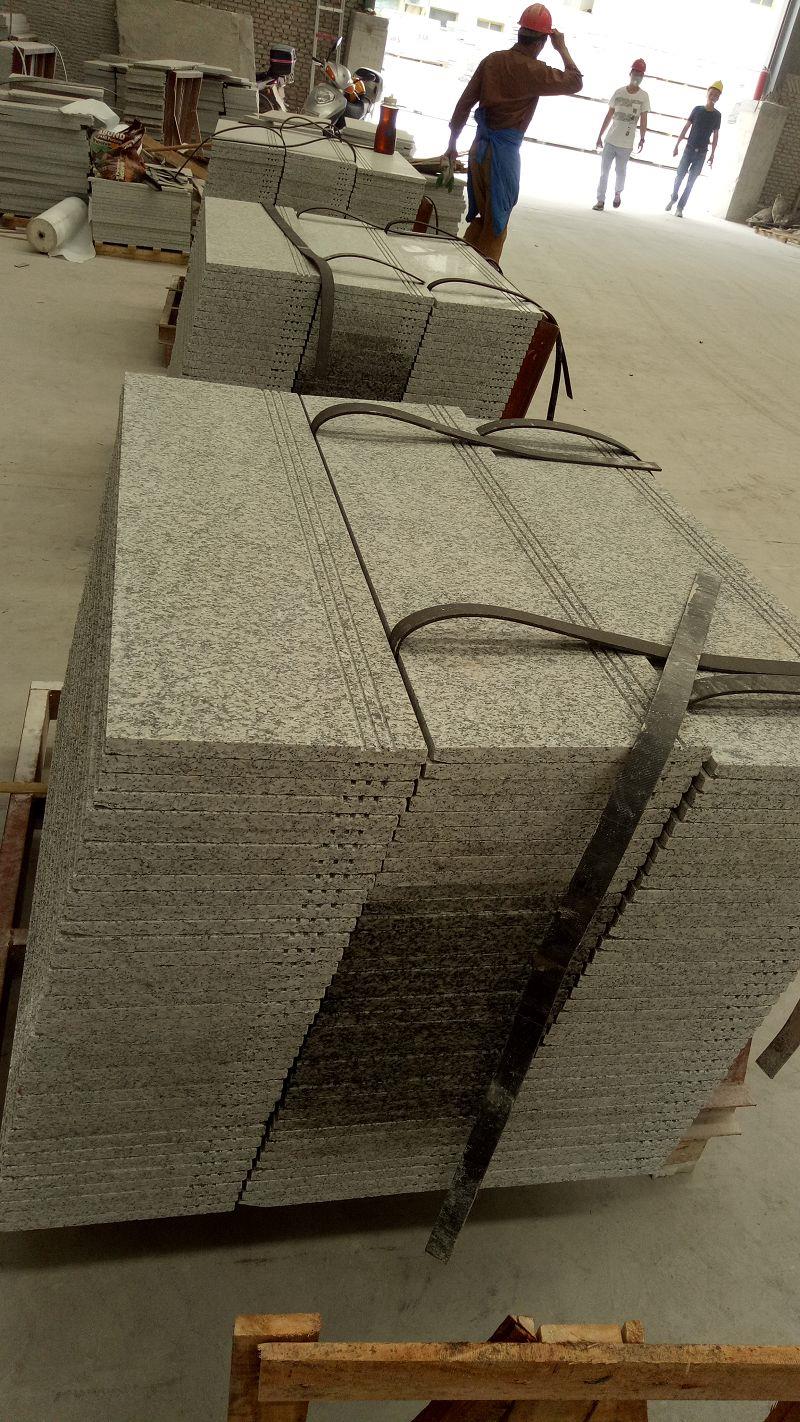
Grooved granite stair treads incorporate parallel cuts near the front edge. The grooves may contribute to the stair's appearance and tread-edge definition.
The SRS Granito Stone for Steps product includes a 1100 × 300 × 20mm granite component with a polished top, three grooves and one long beveled, polished edge.
Groove Details
- Number and spacing of grooves
- Groove depth and width
- Distance from the stair front edge
- Continuity across adjoining treads
- Cleaning and drainage considerations
Grooves are not a substitute for required slip-resistance testing or compliant stair nosing details. Their dimensions should be included in the fabrication drawings.
Granite Stair Nosing and Edge Profiles
The front edge of a granite stair tread can be fabricated with different profiles. The selected shape affects the visible appearance, walking geometry and edge protection of the finished step.
Straight Edge
A simple profile for modern stairs, with appropriate edge easing and finishing.
Beveled Edge
An angled front-edge detail suitable for selected interior and exterior stair designs.
Half Bullnose
A rounded upper edge that can soften the appearance of the stair front.
Full Bullnose
A fully rounded front profile used in selected decorative stone staircases.
Grooved Nosing
Front-edge grooves with dimensions and spacing defined in the approved drawings.
Contrasting Nosing
A visually distinct front-edge treatment where required for stair recognition and accessibility.
Nosing projection, edge radius, contrast and tread geometry should follow the building design and applicable accessibility requirements.
Granite Stair Treads for Different Projects
| Application | Material Direction | Important Requirements |
|---|---|---|
| Outdoor Entrance Steps | Textured granite treads | Wet slip resistance, drainage, tread geometry and edge visibility. |
| Garden Stairways | Flamed or solid granite steps | Stable support, consistent rise, drainage and site access. |
| Commercial Buildings | Custom granite treads and risers | Drawings, accessibility, slip testing and heavy pedestrian use. |
| Residential Interior Stairs | Honed or other approved granite finishes | Finished appearance, structural support, nosing and lighting. |
| Public Landscape Steps | Textured granite stair blocks or treads | Material strength, weather exposure, drainage and maintenance. |
G603 Grey Granite for Stair Projects
G603 is a light grey granite with visible mineral grain. It is used for floor tiles, paving, stair components and other architectural stone applications.
SRS lists G603 stair treads and risers with polished, honed, flamed and bush hammered finish options. Edge processing options include bullnose, half bullnose and beveled profiles.
G603 Stair Components
- Granite stair treads in selected lengths
- Matching vertical risers
- Customized edge processing
- Stone finishes for indoor and outdoor designs
- Cut-to-size components based on drawings

Solid Granite Steps vs Tread and Riser Cladding
Solid Granite Steps
Large stone blocks form substantial landscape steps. Their weight requires careful handling and a properly designed foundation.
Separate Treads and Risers
Cut-to-size components can be installed over a suitable supporting stair structure, with joints and fixings designed for the application.
Custom Stair Assemblies
Landings, corner pieces, curved treads and special nosings can be fabricated according to approved architectural drawings.

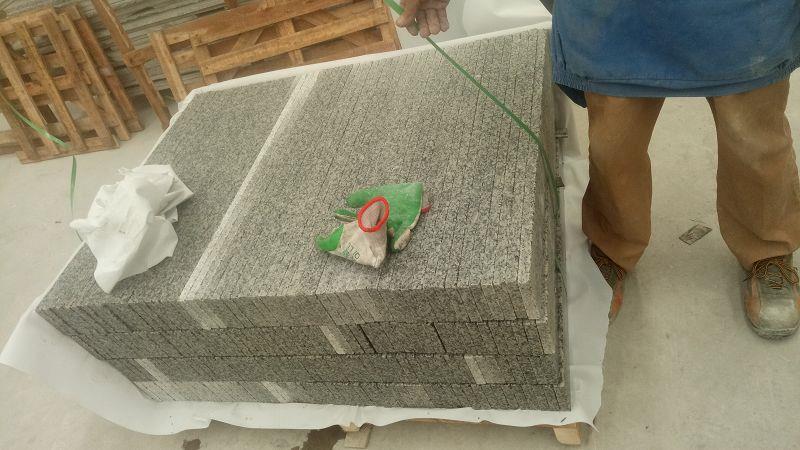
Solid steps and thin cladding components have different support, loading and fixing requirements. Their specifications should not be interchanged without design review.
Granite Stair Cutting and Fabrication Details
A complete fabrication drawing should identify every tread, riser, landing and special stair component. Dimensions should remain consistent with the approved architectural stair layout.
| Detail | Required Information |
|---|---|
| Tread Dimensions | Finished length, depth, thickness and quantity. |
| Riser Dimensions | Finished height, length, thickness and joint arrangement. |
| Nosing Profile | Profile shape, edge radius, projection and processing details. |
| Grooves | Number, spacing, width, depth and position. |
| Stone Finish | Surface treatment for the top, front, sides and other visible faces. |
| Special Components | Landings, corner steps, curved sections and unusual shapes. |
| Installation | Support, fixing details, joints, drainage and required tolerances. |
Granite Stair Inspection Before Shipment
Stone Selection
Check the granite color, visible grain and approved appearance range.
Dimension Check
Verify tread, riser and landing dimensions against the drawings.
Edge Inspection
Check nosing profiles, corners, grooves and exposed stone edges.
Packing Check
Confirm component quantities, identification and packing protection.
Exterior granite steps may also require product-specific test documentation for mechanical performance, weather exposure and slip resistance, depending on the project.
Granite Stair Packing and Project Delivery
Granite treads and risers require protection around finished edges, corners and grooves. Larger solid stone steps require suitable load-bearing supports and lifting arrangements.
Surface Protection
Suitable protective materials help separate finished stone faces during transport.
Wooden Crates
Cut-to-size stair components can be organized and protected according to their dimensions and weight.
Component Identification
Stair numbers, component codes and packing lists help coordinate on-site delivery and installation.
The packing plan should distinguish treads, risers, landings and special pieces. For multi-building projects, separating components by staircase or installation area can simplify site distribution.
What Affects Granite Stair Tread Prices?
| Cost Factor | Influence on Project Pricing |
|---|---|
| Granite Type | Color, material selection and availability. |
| Tread Size | Length, depth, thickness and material consumption. |
| Surface Finish | Polished, flamed, honed or bush hammered processing. |
| Edge Processing | Straight, beveled, bullnose and other profiles. |
| Special Features | Grooves, curved treads, shaped landings and special cut-outs. |
| Quantity | Production planning and the number of different component sizes. |
| Delivery | Packing, total weight, destination and freight terms. |
Granite Stair Project Quotation Checklist
- Granite color and material code
- Indoor or outdoor application
- Tread length, depth and thickness
- Riser dimensions and quantity
- Finished stair layout drawings
- Nosing profile and front-edge dimensions
- Groove specifications, where required
- Surface finish on exposed faces
- Landings, curved pieces and special components
- Approved tolerances and technical requirements
- Component identification and packing
- Destination country or port
Frequently Asked Questions
SRS lists granite stair treads in sizes such as 1000–1500 × 300–350 × 20mm and 1000–1500 × 300–350 × 30mm. Final dimensions should match the approved stair design.
A 20mm granite tread can be suitable for selected supported stair designs. Suitability depends on stone properties, support conditions, span, load requirements and installation details.
Flamed and bush hammered finishes are commonly considered for outdoor granite stairs. The selected surface must meet the wet slip-resistance and other performance requirements of the project.
Yes. SRS lists grooved granite treads, including a 1100 × 300 × 20mm design with three grooves. Groove dimensions should be specified in the fabrication drawings, and required slip resistance must be verified separately.
Treads form the horizontal walking surfaces of stairs. Risers form the vertical faces between treads. Their dimensions and installation details are specified separately.
Yes. SRS lists cut-to-size granite stair components and custom edge processing. Provide the dimensions, quantities, profiles, finishes and drawings for review.
Include the granite color, tread and riser dimensions, thickness, surface finish, nosing profile, grooves, quantities, special components and delivery destination.
Related Granite Stair Products
Request Custom Granite Stair Treads and Risers
SRS supplies granite stair treads, risers and solid stone steps for residential, commercial and landscape projects. Send us your stone selection, drawings, dimensions, finishes, quantities and delivery destination for a quotation.
Request a Granite Stair Quote