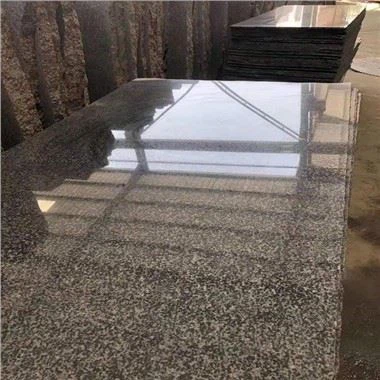

Enhancing Stain Resistance: The Durability of Marble Explained
Jul 08, 2024
Marble, renowned for its timeless beauty and elegance, is a preferred material in both residential and commercial spaces. A significant factor contributing to its popularity is its stain-resistant properties, which enhance its durability and ease of maintenance. Understanding how marble achieves its stain-resistant performance provides insight into its longevity and suitability for various applications.
The stain resistance of marble is primarily attributed to its crystalline structure and the protective sealants applied to its surface. Marble is a metamorphic rock composed mainly of calcite, a crystalline form of calcium carbonate. This crystalline structure forms a relatively dense and non-porous surface, which inherently reduces the likelihood of liquid penetration. However, the natural porosity of marble can still allow for some absorption of liquids, leading to potential staining.

To mitigate this, one of the key strategies involves the application of high-quality sealants. These sealants create a protective barrier on the surface of the marble, effectively blocking the pores and preventing liquids from seeping into the stone. The sealant works by filling the microscopic gaps and cracks on the surface, thereby creating a smooth, impenetrable layer. This process significantly enhances the marble's resistance to common household stains such as coffee, wine, and oil.
Moreover, modern advancements in sealing technologies have further improved the effectiveness of these treatments. Today's sealants are designed to be more durable and long-lasting, often incorporating advanced polymers that provide a robust shield against moisture and stains. These advanced sealants are also UV-resistant, ensuring that the marble retains its aesthetic appeal and does not yellow or degrade when exposed to sunlight over time.
Regular maintenance plays a crucial role in sustaining the stain resistance of marble. Periodic resealing, typically recommended every six to twelve months depending on the usage and exposure, helps maintain the protective barrier. This practice not only preserves the stone's appearance but also prolongs its lifespan by preventing the accumulation of dirt and grime that could potentially lead to deeper staining issues.
In addition to sealants, the routine care and cleaning of marble surfaces contribute significantly to their stain-resistant performance. Using pH-neutral cleaners specifically formulated for marble ensures that the surface remains free from residues that can attract dirt and grime. Abrasive or acidic cleaners are avoided as they can degrade the sealant and etch the marble, making it more susceptible to staining.
Furthermore, the physical placement and usage of marble can influence its stain resistance. For instance, in high-traffic areas or places prone to spills, such as kitchens and bathrooms, extra care is taken to promptly clean up any spills to prevent potential staining. The strategic use of coasters, mats, and trivets can also protect the marble from direct exposure to liquids and heat, enhancing its overall stain resistance.
In commercial settings, where marble surfaces are exposed to higher levels of foot traffic and potential spills, the implementation of a rigorous maintenance regime is essential. This includes regular cleaning, prompt spill management, and periodic professional polishing to restore the marble's original luster and maintain its protective layer.